
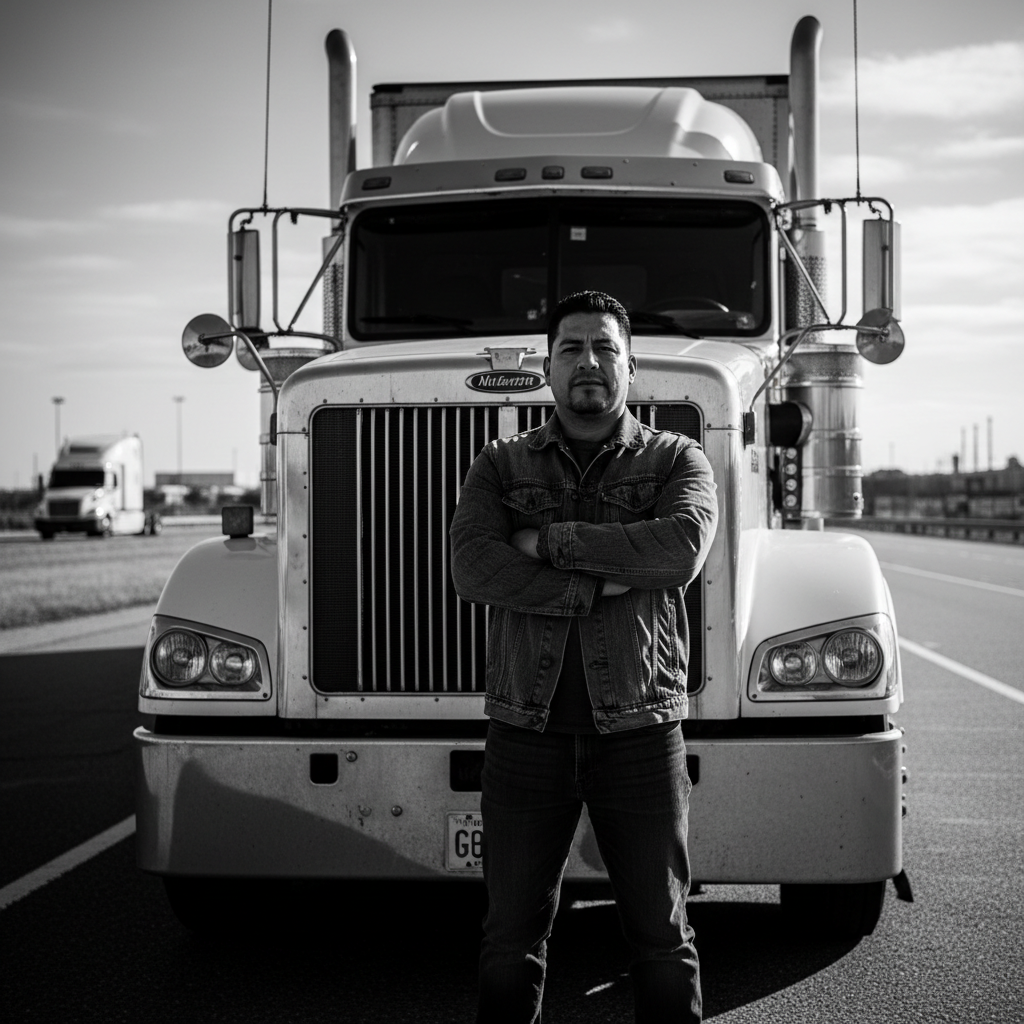
It happened at mile marker 247 on I-81.
Or in your yard at 4am. Or on the way to pick up a load that delivers tomorrow morning.
Your truck is down. And every day it sits, you’re losing money you can’t get back.
Here’s how owner-operators and small fleets are getting back on the road in 24 hours — without draining savings, borrowing from family, or waiting on an insurance claim that won’t cover half the repair anyway.
The Real Cost of a Breakdown
Most owner-operators running regular loads generate $2,000 to $5,000 in revenue per week.
Every day your truck is off the road, that’s $400 to $700 gone. Not delayed — gone. Those loads get reassigned. That broker finds someone else. That shipper relationship gets a little colder.
On top of the lost revenue, there’s the repair itself. A blown turbo runs $3,000 to $8,000. Transmission failure: $5,000 to $15,000. Engine issues: up to $25,000 or more depending on the make and how bad it got before you caught it.
That money needs to come from somewhere right now — not in 60 days when a bank finishes reviewing your application.
Why Banks Can’t Help You Here
Bank loans take 30 to 90 days to process. Even the fast ones take two to three weeks.
You don’t have two to three weeks. You have tomorrow’s delivery.
Beyond the timeline, trucking companies face specific underwriting challenges with traditional lenders. Revenue is variable. Fuel costs fluctuate. Owner-operators often file as sole proprietors with tax returns that show thin net income after expenses. Banks look at that and see risk — even when the business is actually running fine.
The result is that trucking companies — one of the most cash-flow-intensive business types that exists — are systematically underserved by traditional lending. You generate real revenue. You have real loads. And you still can’t get a fast yes from a bank when you need it most.
Revenue-Based Financing: Built for Exactly This Situation
Revenue-based financing doesn’t care about your tax return net income or whether fuel costs made last quarter look thin.
It looks at what’s actually moving through your business bank account. The deposits from completed loads. The consistent revenue of an operating trucking company.
If you’re generating $10,000 to $100,000 per month in gross revenue, you can typically access $15,000 to $200,000 in working capital — with a decision in 24 to 48 hours and funds available fast enough to actually matter.
No collateral beyond what you already have. No waiting on a committee. No explaining to a loan officer why your fuel surcharges made your margins look different last quarter.
Repayment That Works With Your Cash Flow
Here’s the part that matters most for trucking.
Revenue in trucking is not perfectly flat. Good weeks and slow weeks. Seasonal freight patterns. The occasional load that gets cancelled or pays late. A fixed monthly loan payment doesn’t account for any of that — it hits the same amount regardless of how the month went.
Revenue-based financing repayment is a percentage of your ongoing revenue. Strong freight month — more gets applied. Slower stretch — less comes out. It moves with your actual cash flow instead of against it.
That flexibility isn’t just nice to have. For an owner-operator or small fleet, it’s the difference between staying solvent through a slow patch and getting squeezed when you can least afford it.
What Trucking Companies Use It For
- Emergency repairs — getting a broken truck back on the road before the lost revenue compounds
- Putting a second truck on the road without waiting to save the full purchase price
- Covering fuel on a large load while waiting for the broker to pay
- New tires, brake jobs, and scheduled maintenance that can’t wait
- Hiring and onboarding a new driver while waiting for their first loads to clear
- Buying a truck outright instead of leasing at terms that cost more long-term
- Insurance lump-sum payments that hit all at once and strain monthly cash flow
What You Need to Qualify
- $10,000 or more per month in gross trucking revenue
- 3 to 6 months of operating history
- Active business bank account with consistent deposits
Owner-operators who’ve had credit issues from a rough patch, a slow freight season, or equipment costs that got ahead of revenue still qualify regularly — as long as the current revenue is consistent and the loads are moving.
Every Day You’re Sitting Is Money You’re Not Making
There’s no good time for a breakdown. But there is a right way to respond to one.
The trucking companies that stay on top of their cash flow — that have access to capital when they need it instead of scrambling when something breaks — are the ones that grow. The ones that add trucks. The ones that get the better lanes because they can actually commit to the volume.
A breakdown doesn’t have to mean three days off the road waiting for a bank to call you back.
Fill out the form below. Two minutes. No credit check required. Find out what you qualify for — and get back on the road.
The Hidden Cost Nobody Talks About
Everyone focuses on the repair bill. The $8,000 turbo. The $12,000 transmission.
But the real cost of a breakdown for an owner-operator isn’t just the repair. It’s everything that compounds around it.
It’s the load you couldn’t take because you were sitting in a shop. It’s the broker relationship that cools because you had to call and say you can’t make the delivery. It’s the spot rate you missed because you weren’t available when the load posted. It’s the schedule disruption that takes two weeks to recover from even after the truck is back on the road.
That’s why the right answer to a breakdown isn’t just finding the repair money — it’s finding it fast enough that the rest of the damage stays minimal. Every extra day the truck sits is not just lost revenue. It’s a compounding problem.
Building a Cash Reserve vs. Having Access to Capital
Most financial advice tells owner-operators to build a cash reserve for emergencies. Three months of operating expenses. Set it aside and leave it alone.
That’s good advice. But it’s also slow to build and hard to maintain when equipment costs, fuel, and insurance are all hitting the same account every month.
Having access to capital — knowing that if a breakdown happens tomorrow you can have $15,000 in your account within 48 hours — is a different kind of security. It means your cash reserve doesn’t have to be the only line of defense. It means you can make the right business decisions without the fear that one bad week takes everything down.
The trucking companies that grow consistently are the ones that have both: cash reserves and access to fast capital when they need it. Not one or the other.
Why Black Lamb Finance Works for This
Black Lamb Finance was built specifically for business owners who generate real, consistent revenue but don’t fit the traditional lending profile.
Not because there’s something wrong with their businesses — because traditional lending wasn’t designed with their industry in mind.
Revenue-based financing looks at what your business actually does, not how it looks on a form. If you’re generating consistent monthly revenue, the application takes two minutes and the decision comes in 24 to 48 hours. No lengthy process. No waiting for approvals that never come.
The bank’s no is not the final word. It’s just the wrong institution asked the wrong question.